The eight trigrams
Lake Trigram: 兌 ☱
Study dui when you want to understand how the I Ching encodes communication, attraction, and surface openness without losing support underneath.
In short
Dui is open at the top and solid below. It often suggests exchange, openness, expression, and pleasure with structure beneath it.
Three-line structure
兌 is written as ☱ and encoded as 110. Read from bottom to top, its lines are bottom yang, middle yang, top yin.
This matters because the I Ching is structural first. The character of 兌 begins with its exact line order, not just its later symbolic associations.
What 兌 contributes to a hexagram
Dui is open at the top and solid below. It often suggests exchange, openness, expression, and pleasure with structure beneath it.
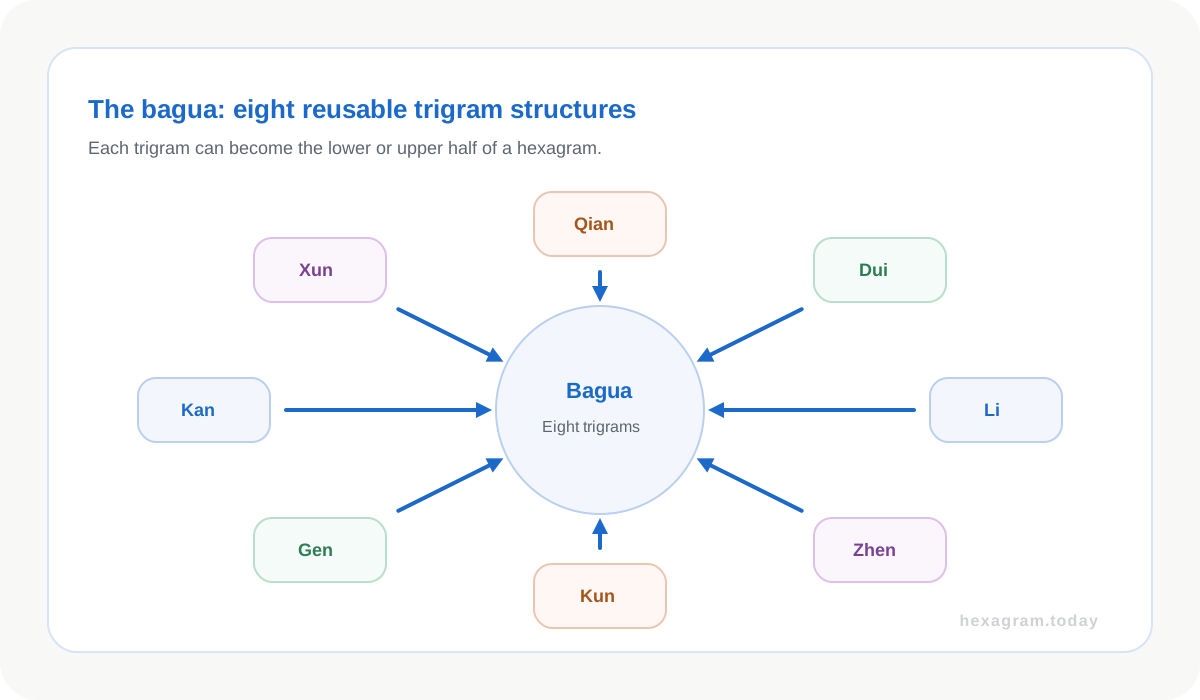
When 兌 appears as a lower or upper trigram, it changes how the full hexagram is read by contributing its own pressure, orientation, and rhythm.
How to study it well
A strong way to study 兌 is to learn its line pattern, its natural image (澤), and then notice where it appears inside hexagrams.
That approach keeps the trigram readable as structure, symbol, and part of a larger figure all at once.