Glossary
Yin and Yang in the I Ching
Before there are trigrams, hexagrams, or changing lines, there are only two line states. Learning how yin and yang behave is the shortest path to understanding the whole oracle.
In short
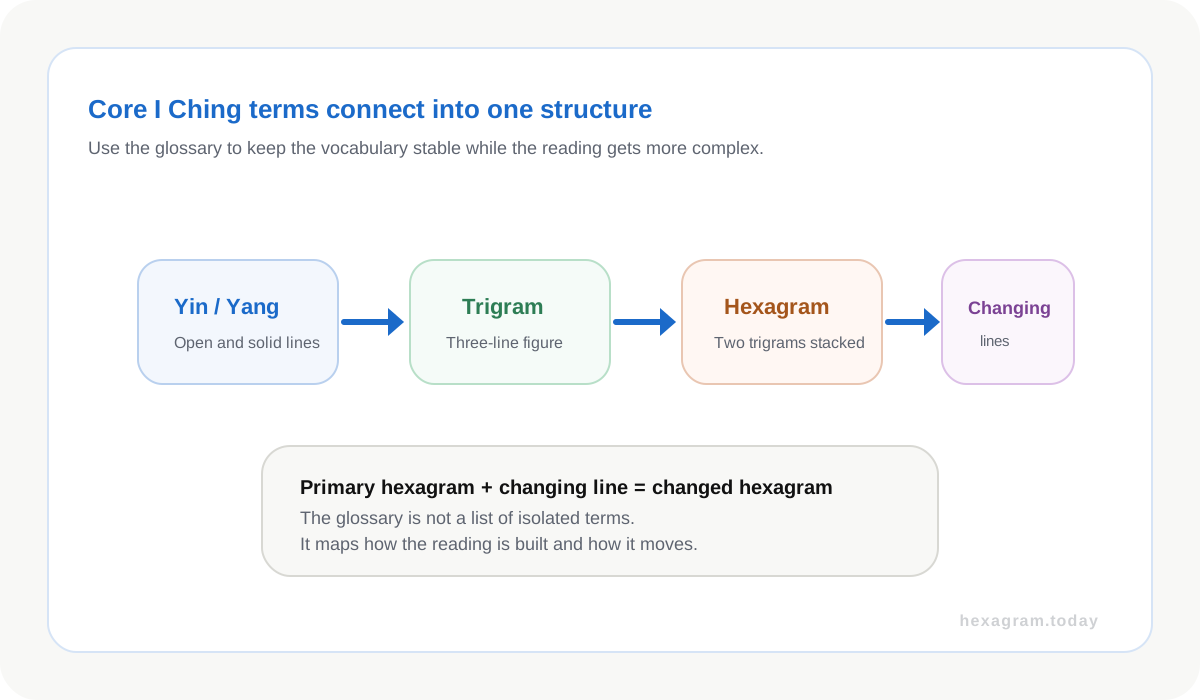
In the I Ching, yin and yang are the two line states from which every trigram and hexagram is built: yin is open, and yang is solid.
What yin and yang mean here
In the I Ching, yin and yang are not abstract slogans. They are rendered as line states. A broken line represents yin, and a solid line represents yang.
Those two states are enough to encode the entire structure of the oracle. Every larger figure is made by stacking them.
Why line states matter
Because the oracle is built from lines upward, yin and yang carry structural meaning before they carry metaphorical meaning. They define whether a trigram or hexagram is open, forceful, yielding, stable, or changing.
This is why visualizing the lines often makes the I Ching easier to understand than reading names alone.
How yin and yang connect to readings
When you cast a reading, you are not receiving a block of text first. You are receiving a six-line pattern. That pattern only exists because each line begins as yin or yang.
Changing lines matter because they flip from one state to the other. The changed hexagram is therefore a new arrangement of yin and yang.