Glossary
What the Bagua Are in the I Ching
The bagua are the eight named trigrams, each built from three yin-yang lines. They are the compact structural vocabulary of the I Ching.
In short
The bagua are the eight trigrams of the I Ching. Together they form the basic map from which the sixty-four hexagrams are assembled.
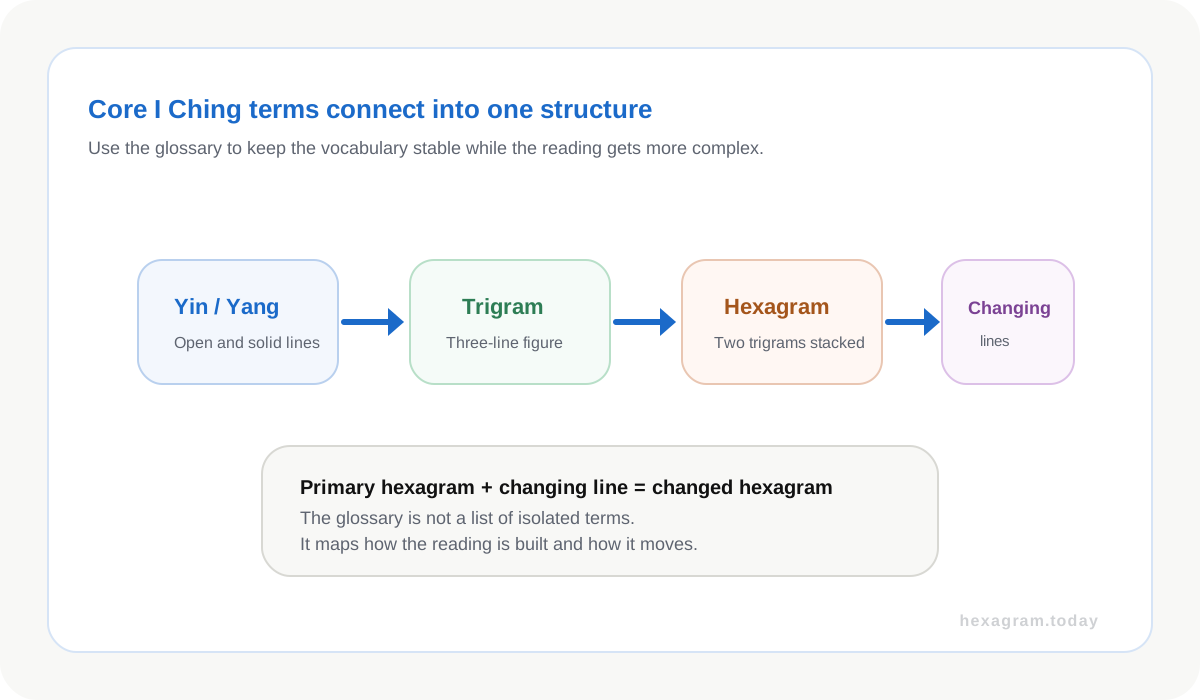
What the bagua are
The bagua are the eight possible trigrams: qian, kun, dui, li, zhen, xun, kan, and gen. Each is a three-line arrangement of yin and yang.
Together they form a finite set of patterns that can be combined to produce every hexagram.
Why the bagua matter
The bagua matter because they turn a long list of sixty-four figures into a smaller, learnable system. Once you recognize the eight trigrams, hexagrams become easier to parse.
They also give a shared vocabulary for discussing lower and upper structure in a reading.
How to study the bagua
A strong approach is to learn each trigram as a line pattern first, then as a named figure, and only then as part of larger hexagrams.
That order keeps the system structural rather than mystical, which makes it easier to read and teach.